Meyer Tree Service
  • Our Services
    • Tree Trimming and Pruning
    • Tree Removal
    • Brush Removal
    • Stump Grinding
    • Tree Planting & Transplanting
    • Emergency Tree Services
    • Lightning Protection
    • Soil Decompaction/Air Excavation
    • Construction Consultation
    • Tree Support & Protection Systems
    • Plant Health Care
  • Commercial Services
  • About Us
    • Leadership Team
    • Certifications
    • Areas We Serve
      • Clayton
      • Kirkwood
      • Ladue
      • Sunset Hills
    • Careers
    • Testimonials
    • Blog
  • Meyer Tree Service-logo-full
  • Certified Arborist
  • Emergency Service
  • Contact
  • Menu Menu

St. Louis Homeowners’ Guide to Spring Storm Preparation for Trees

Spring storms are common in the St. Louis area, often bringing strong winds, heavy rain, and lightning. While these storms are a normal part of the season, they can quickly turn dangerous when trees become unstable or damaged.
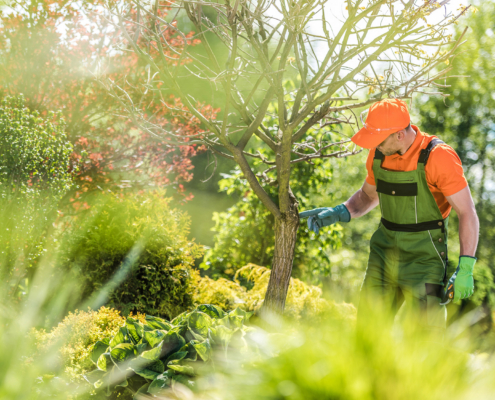
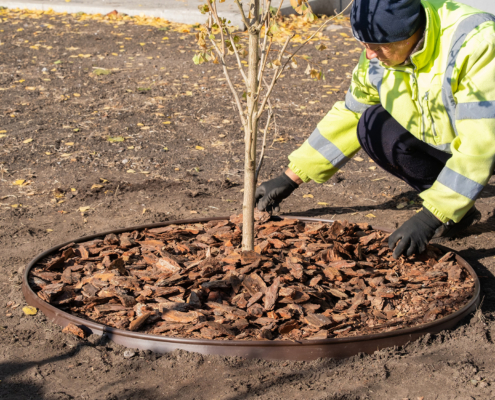
That’s why storm preparation for trees is an important part of spring property maintenance. With proper care and professional guidance, homeowners can significantly improve storm damage prevention for trees and avoid costly emergency situations later in the season.

Why Spring Storms in St. Louis Cause So Much Tree Damage

The Midwest is known for unpredictable spring weather, and St. Louis is no exception. Storm systems moving through the region often bring a combination of wind, rain, and lightning that can stress trees and expose structural weaknesses.

Several factors contribute to tree failures during these storms:

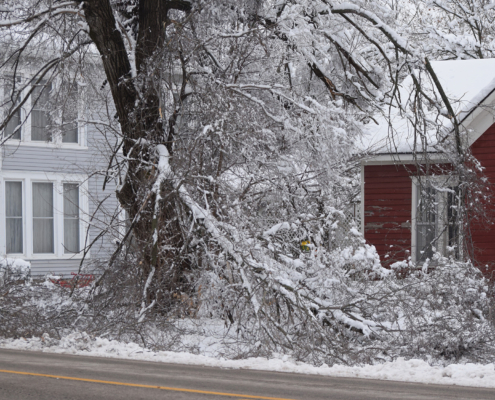
  • Strong Wind Gusts and Severe Storm Fronts: Powerful winds can place tremendous pressure on tree canopies, especially for trees with dense foliage or unbalanced growth. Without proper storm preparation for trees, heavy branches can snap or entire trees may be uprooted.
  • Saturated Soil Weakening Root Systems: Spring storms often bring extended rainfall that saturates the ground. When soil becomes overly wet, it reduces stability around the root system, making trees more likely to lean or fall during high winds.
  • Heavy Rain Adding Weight to Branches: Water accumulation on leaves and branches increases the overall weight of the canopy. This added stress can cause already weakened limbs to fail.
  • Lightning and Severe Weather Events: Lightning strikes and sudden storm intensity can severely damage trees. Even when a tree appears intact after a storm, hidden structural damage may still exist.

Understanding these risks highlights why storm preparation for trees is an important preventative step for homeowners in storm-prone areas.

Warning Signs a Tree May Be Vulnerable During Storms

Before storm season begins, it’s important to evaluate whether trees on your property show signs of structural weakness. A professional arborist tree inspection can identify these concerns, but homeowners can also watch for several warning signs.

Dead or Hanging Limbs

Dead branches are often brittle and more likely to break during strong winds. Even small limbs can become dangerous projectiles during storms, while larger dead branches can cause serious property damage.

Cracks in the Trunk or Major Branches

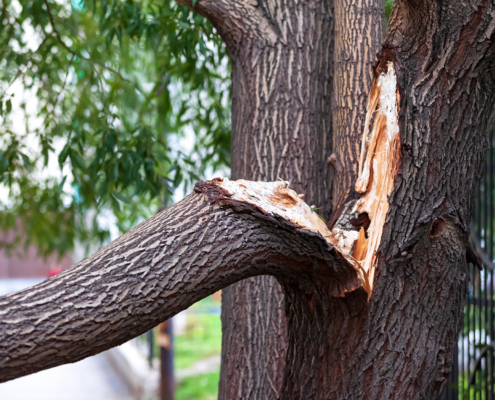
Visible cracks or splits in a tree’s trunk or large branches may indicate internal weakness. These structural flaws can worsen under wind pressure, increasing the likelihood of branch failure.

Leaning or Shifting Trees

A tree that suddenly begins leaning or appears unstable may have root damage or compromised soil support. These trees are particularly vulnerable during storms and should be evaluated as part of storm preparation for trees.

Weak Branch Attachments

Branches that form tight V-shaped junctions with the trunk often develop weaker connections than wider U-shaped attachments. These weak points are common locations for storm-related breakage.

How Strategic Pruning Helps Reduce Storm Damage

One of the most effective forms of storm preparation for trees is strategic pruning. Proper pruning removes weak or damaged branches before storms have the chance to break them off unexpectedly. This preventative approach reduces hazards while improving the overall structure of the tree.

Pruning also improves airflow through the canopy and reduces wind resistance. When branches are overly dense, strong winds can place excessive pressure on the tree’s structure. By thinning out crowded growth and removing compromised limbs, arborists help strengthen the tree and improve storm damage prevention for trees.

Why Branches Over Your Roof Should Be Evaluated Before Storm Season

Trees provide shade, beauty, and environmental benefits, but branches growing too close to structures can create serious storm risks. Homeowners should pay close attention to tree branches over roof areas, especially before the start of spring storm season.

Several concerns can arise when branches extend over structures:

  • Roof Damage During High Winds: Large branches hanging over a roof can break during storms and cause significant structural damage.
  • Falling Limbs Over Driveways or Walkways: Branches positioned above frequently used areas increase the risk of injury or property damage.
  • Branches Near Utility Lines: Storm-damaged limbs near power lines can create electrical hazards and service disruptions.
  • Debris Accumulation in Gutters: Overhanging branches can drop leaves and small twigs that clog gutters and contribute to water damage.

Addressing tree branches over roof areas through trimming and pruning is a key step in effective storm preparation for trees.

 Meyer Tree Service offers professional trimming and pruning services that help reduce structural risks, improve canopy balance, and strengthen trees before severe weather arrives. Learn more about how we can help you protect your property. 

Our Tree Trimming & Pruning

The Role of Professional Arborist Inspections Before Storm Season

While homeowners can identify some visible warning signs, many structural tree problems are not obvious without professional training. A certified arborist can perform a detailed arborist tree inspection to evaluate the stability and health of trees on your property.

Structural Risk Evaluation

Arborists analyze the tree’s structure, looking for weak branch attachments, decay pockets, and canopy imbalance that may increase storm vulnerability.

Identifying Hidden Tree Weaknesses

Some trees appear healthy from the outside but contain internal decay or root damage. Professional inspections can uncover these hidden issues before they lead to failure during storms.

Creating a Preventative Tree Care Plan

Following an inspection, arborists may recommend pruning, structural support, or other maintenance strategies to improve tree stability. These proactive steps are essential for effective storm preparation for trees and long-term tree health.

What to Do After a Storm Causes Tree Damage

Even with preventative care, severe weather can still damage trees. When this happens, it’s important for homeowners to respond safely and contact professionals when necessary.

After a storm, homeowners should:

  • Assess Damage from a Safe Distance: Avoid approaching trees with broken or hanging limbs, as they may fall unexpectedly.
  • Stay Clear of Downed Power Lines: Trees that have come into contact with electrical lines should only be handled by trained professionals.
  • Document Property Damage: Taking photos of storm damage can help with insurance claims and repair assessments.
  • Contact a Professional Emergency Tree Service: A qualified emergency tree service can safely remove damaged limbs, stabilize compromised trees, and clear debris from your property.

Professional help ensures storm damage is addressed safely and efficiently.

Proactive Storm Preparation Protects Your Home and Landscape

Preparing trees for severe weather is one of the most effective ways to protect both your property and your landscape investment. Routine inspections, strategic pruning, and proper tree maintenance all contribute to safer and healthier trees.

By prioritizing storm preparation for trees, homeowners reduce the likelihood of falling limbs, structural damage, and costly emergency removals. Proactive care also supports long-term tree health, allowing trees to grow stronger and more resilient over time.

Schedule Professional Storm Preparation for Trees With Meyer Tree Service

Spring storms can arrive quickly, but proper storm preparation for trees can significantly reduce the risks they pose.  The experienced arborists at Meyer Tree Service provide expert inspections, pruning, and storm preparation services designed to keep trees healthy and safe.

Contact our team today to schedule professional storm preparation for trees and ensure your property is ready for the upcoming storm season.

Share This Post

  • Share on Facebook
  • Share on X
  • Share on WhatsApp
  • Share on Pinterest
  • Share on LinkedIn
  • Share on Tumblr
  • Share on Vk
  • Share on Reddit
  • Share by Mail

More Like This

What to Look for When Hiring a Tree Company in St. Louis

What to Look for When Hiring a Tree Company in St. Louis

Tree Services
https://www.meyertreecare.com/wp-content/uploads/2026/06/What-to-Look-for-When-Hiring-a-Tree-Company-in-St.-Louis.jpg 1250 2000 Abstrakt Marketing /wp-content/uploads/2024/06/Meyer-Tree-Service-logo-full.png Abstrakt Marketing2026-06-17 08:41:552026-06-18 08:17:19What to Look for When Hiring a Tree Company in St. Louis

How to Provide Tree Protection for Young Trees Facing Severe Weather

Tree Services
https://www.meyertreecare.com/wp-content/uploads/2026/04/How-to-Provide-Tree-Protection-for-Young-Trees-Facing-Severe-Weather.jpg 1250 2000 Abstrakt Marketing /wp-content/uploads/2024/06/Meyer-Tree-Service-logo-full.png Abstrakt Marketing2026-04-17 15:48:212026-06-18 08:17:19How to Provide Tree Protection for Young Trees Facing Severe Weather
Common Tree Problems St. Louis Homeowners Should Watch for After Winter

Common Tree Problems St. Louis Homeowners Should Watch for After Winter

Tree Services
https://www.meyertreecare.com/wp-content/uploads/2026/04/Common-Tree-Problems-St.-Louis-Homeowners-Should-Watch-for-After-Winter.jpg 1250 2000 Abstrakt Marketing /wp-content/uploads/2024/06/Meyer-Tree-Service-logo-full.png Abstrakt Marketing2026-04-02 23:05:422026-06-18 08:17:20Common Tree Problems St. Louis Homeowners Should Watch for After Winter

How to Spot Winter Tree Damage in St. Louis (And What to Do About It)

Tree Services
https://www.meyertreecare.com/wp-content/uploads/2026/01/How-to-Spot-Winter-Tree-Damage-in-St.-Louis-And-What-to-Do-About-It.jpg 1250 2000 Abstrakt Marketing /wp-content/uploads/2024/06/Meyer-Tree-Service-logo-full.png Abstrakt Marketing2026-01-06 08:02:172026-06-18 08:17:21How to Spot Winter Tree Damage in St. Louis (And What to Do About It)

Landscaping Tips for Summer: How to Keep Your Property Green and Gorgeous

Tree Services
https://www.meyertreecare.com/wp-content/uploads/2025/04/How-to-Keep-Your-Property-Green-and-Gorgeous.jpg 1250 2000 Abstrakt Marketing /wp-content/uploads/2024/06/Meyer-Tree-Service-logo-full.png Abstrakt Marketing2025-04-25 15:24:392026-06-18 08:17:23Landscaping Tips for Summer: How to Keep Your Property Green and Gorgeous

Your Complete Guide to Tree Anatomy: Roots, Trunks, and Canopies

Tree Services
https://www.meyertreecare.com/wp-content/uploads/2025/04/Your-Complete-Guide-to-Tree-Anatomy.jpg 1250 2000 Abstrakt Marketing /wp-content/uploads/2024/06/Meyer-Tree-Service-logo-full.png Abstrakt Marketing2025-04-25 13:16:082026-06-18 08:17:23Your Complete Guide to Tree Anatomy: Roots, Trunks, and Canopies
Native Flowering Trees for Your Landscaping in Missouri

Native Flowering Trees for Your Landscaping in Missouri

Tree Services
https://www.meyertreecare.com/wp-content/uploads/2025/04/Native-Flowering-Trees-for-Your-Landscaping-in-Missouri.jpg 1250 2000 Abstrakt Marketing /wp-content/uploads/2024/06/Meyer-Tree-Service-logo-full.png Abstrakt Marketing2025-04-04 07:49:022026-06-18 08:17:23Native Flowering Trees for Your Landscaping in Missouri
Group of people planting tree

The Ultimate Tree Planting Guide: Best Practices for a Thriving St. Louis Landscape

tree planting and transplanting, Tree Services
https://www.meyertreecare.com/wp-content/uploads/2025/03/Group-of-people-planting-tree.jpg 1250 2000 Abstrakt Marketing /wp-content/uploads/2024/06/Meyer-Tree-Service-logo-full.png Abstrakt Marketing2025-03-28 12:58:532026-06-18 08:17:24The Ultimate Tree Planting Guide: Best Practices for a Thriving St. Louis Landscape
Person wrapping tree to protect it from insects

Treating Tree Pests: Protect Your St. Louis Landscape with Professional Care

Tree Services
https://www.meyertreecare.com/wp-content/uploads/2025/02/Person-wrapping-tree-to-protect-it-from-insects.jpg 1250 2000 Abstrakt Marketing /wp-content/uploads/2024/06/Meyer-Tree-Service-logo-full.png Abstrakt Marketing2025-02-13 17:39:562026-06-18 08:17:24Treating Tree Pests: Protect Your St. Louis Landscape with Professional Care
Previous Previous Previous Next Next Next

Categories

  • Certified Arborist
  • Commercial Tree Care
  • Deep Root Fertilization
  • Emergency Tree Services
  • Miscellaneous
  • Plant Health Care
  • Plant Health Care Services
  • Seasonal Tree Care
  • tree planting and transplanting
  • Tree Removal
  • Tree Services
  • Tree Services (HOAs)
  • Tree Trimming & Pruning

Contact Us

"*" indicates required fields

Address*

Accreditation

asm-isa

Affiliations

Tree Services

Tree Trimming and Pruning

Tree Removal

Tree Planting and Transplanting

Stump Grinding and Removal

Commercial Tree Services

Contact Us

1560 Fairview Ave.
St. Louis, MO 63132

314.426.2911

info@meyertreecare.com


Website by Abstrakt Marketing Group ©
  • Sitemap
  • Privacy Policy
Link to: Why Early Spring Is the Smartest Time to Schedule an Arborist Tree Inspection Link to: Why Early Spring Is the Smartest Time to Schedule an Arborist Tree Inspection Why Early Spring Is the Smartest Time to Schedule an Arborist Tree Inspecti...Why Early Spring Is the Smartest Time to Schedule an Arborist Link to: Why Spring Is the Best Time for Soil Aeration Around Your Trees Link to: Why Spring Is the Best Time for Soil Aeration Around Your Trees Why Spring Is the Best Time for Soil Aeration Around Your Trees
Scroll to top Scroll to top Scroll to top

This site uses cookies. By continuing to browse the site, you are agreeing to our use of cookies.

AcceptLearn more

Cookie and Privacy Settings


How we use cookies

We may request cookies to be set on your device. We use cookies to let us know when you visit our websites, how you interact with us, to enrich your user experience, and to customize your relationship with our website.

Click on the different category headings to find out more. You can also change some of your preferences. Note that blocking some types of cookies may impact your experience on our websites and the services we are able to offer.

Essential Website Cookies

These cookies are strictly necessary to provide you with services available through our website and to use some of its features.

Because these cookies are strictly necessary to deliver the website, refusing them will have impact how our site functions. You always can block or delete cookies by changing your browser settings and force blocking all cookies on this website. But this will always prompt you to accept/refuse cookies when revisiting our site.

We fully respect if you want to refuse cookies but to avoid asking you again and again kindly allow us to store a cookie for that. You are free to opt out any time or opt in for other cookies to get a better experience. If you refuse cookies we will remove all set cookies in our domain.

We provide you with a list of stored cookies on your computer in our domain so you can check what we stored. Due to security reasons we are not able to show or modify cookies from other domains. You can check these in your browser security settings.

Other external services

We also use different external services like Google Webfonts, Google Maps, and external Video providers. Since these providers may collect personal data like your IP address we allow you to block them here. Please be aware that this might heavily reduce the functionality and appearance of our site. Changes will take effect once you reload the page.

Google Webfont Settings:

Google Map Settings:

Google reCaptcha Settings:

Vimeo and Youtube video embeds:

Accept settingsHide notification only