Meyer Tree Service
  • Our Services
    • Tree Trimming and Pruning
    • Tree Removal
    • Brush Removal
    • Stump Grinding
    • Tree Planting & Transplanting
    • Emergency Tree Services
    • Lightning Protection
    • Soil Decompaction/Air Excavation
    • Construction Consultation
    • Tree Support & Protection Systems
    • Plant Health Care
  • Commercial Services
  • About Us
    • Leadership Team
    • Certifications
    • Areas We Serve
      • Clayton
      • Kirkwood
      • Ladue
      • Sunset Hills
    • Careers
    • Testimonials
    • Blog
  • Meyer Tree Service-logo-full
  • Certified Arborist
  • Emergency Service
  • Contact
  • Menu Menu

Native Flowering Trees for Your Landscaping in Missouri

Choosing the right flowering trees for your landscaping can transform an ordinary outdoor space into a vibrant, thriving landscape. Missouri’s native flowering trees have adapted to thrive in our unique climate and soil conditions, supporting pollinators and local wildlife along the way. Not sure where to start? We’ve rounded up the best native flowering trees for Missouri landscapes—plus key tips on choosing the right one for your space.
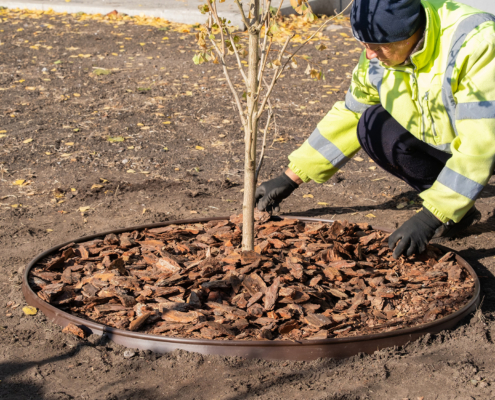
Why Choose Native Trees for Your Landscaping?

When it comes to selecting a flowering tree for your landscaping, native species offer some unbeatable advantages. These trees have evolved to thrive in their local environment, making them both practical and ecologically valuable for homeowners and property managers alike.

Natives also offer the advantage of relatively quick establishment and minimal care once they’re rooted. Here’s why they’re often the best choice:

  • Low maintenance and climate-adapted: Native flowering trees are already well-suited to Missouri’s soil types, rainfall patterns, and seasonal shifts. This means they generally need less watering, fertilizing, or intervention than non-native species.
  • Resistant to local pests and diseases: Because these trees have grown alongside native insects and microorganisms, they’re more resilient. You’ll encounter fewer issues with invasive pests or unfamiliar diseases, which can often plague imported species.
  • Support pollinators and native wildlife: From bees and butterflies to birds and small mammals, Missouri’s trees play a key role in local ecosystems. By planting native flowering trees for your landscaping, you’re contributing to environmental health.

Top Native Flowering Trees for Missouri Landscapes

Missouri is home to an incredible variety of native trees that offer striking seasonal color, wildlife value, and long-term landscape benefits. Choosing native flowering trees for your landscaping ensures your investment will thrive in local conditions and contribute positively to the surrounding environment. Whether you’re designing a new landscape or enhancing an established yard, the following trees are standout options.

Eastern Redbud (Cercis canadensis)

A classic favorite across Missouri, the Eastern Redbud is one of the first trees to bloom in early spring. Its vibrant pinkish-purple flowers line the branches before the leaves emerge, creating a bold splash of eye-catching color while most other trees are trying to wake up color.

  • Bloom Time: Early spring (late March through early May)
  • Flower Color: Pink to magenta
  • Tree Size: Small – typically 15–30 ft tall
  • Care Needs: Adaptable to sun or partial shade; prefers well-drained soil
  • Special Considerations: Works beautifully as an understory tree and pairs well with larger shade species

Redbuds are not only ornamental—they’re also helpful to early-season pollinators, making them both a beautiful and beneficial choice.

Flowering Dogwood (Cornus florida)

As Missouri’s state tree, the flowering dogwood is a must-have for native landscaping. Its showy bracts bloom in mid to late spring, followed by bright red berries in fall and striking foliage.

  • Bloom Time: Mid to late April
  • Flower Color: White or soft pink
  • Tree Size: Small – 15–25 ft tall
  • Care Needs: Thrives in partial shade and moist, well-drained soil
  • Special Considerations: Provides year-round interest with spring flowers, summer greenery, and fall color

Dogwoods are ideal for adding texture and seasonal interest to shady or woodland-style gardens.

Hawthorn (Crataegus spp.)

Hawthorns are a hardy and diverse group of flowering trees that do well in a variety of settings. Their blooms are followed by bright red berries that persist into winter.  The white Hawthorn flower is the Missouri State Flower.

  • Bloom Time: April through Late May
  • Flower Color: White or pink, depending on species
  • Tree Size: Small to medium – 15–30 ft tall
  • Care Needs: Prefers full sun and tolerates many soil types
  • Special Considerations: Some varieties have thorns; provides excellent food and cover for birds

If you’re looking for flowering trees for your landscaping that offer visual appeal and wildlife value, Hawthorns deliver on both fronts.

Fringetree (Chionanthus virginicus)

Sometimes called the “old man’s beard,” the fringetree produces delicate, feathery white blooms that dangle from its branches in late spring.

  • Bloom Time: April through May
  • Flower Color: White, lightly fragrant
  • Tree Size: Small – 12–20 ft tall
  • Care Needs: Tolerates full sun to part shade; likes moist but well-drained soils
  • Special Considerations: A lesser-known native gem that works well as a specimen tree

The fringetree adds a touch of softness and elegance to any landscape and fits well into smaller spaces.

Magnolia (Magnolia spp.)

One magnolia variety is native to Missouri, the cucumber magnolia (Magnolia acuminata).  However, most magnolia varieties do well in Missouri. Magnolia trees produce dramatic blossoms and rich green leaves.

  • Bloom Time: Early to mid-spring (some later varieties)
  • Flower Color: White, pink, or purple depending on species
  • Tree Size: Medium to large – 20–80 ft depending on variety
  • Care Needs: Full sun to partial shade; moist, rich soil
  • Special Considerations: Some species may be sensitive to frost; best planted in protected spots

Magnolias are among the most show-stopping flowering trees for landscaping, offering both fragrance and bold visual appeal.

Tulip Tree (Liriodendron tulipifera)

For those seeking shade and grandeur, the tulip tree is a fast-growing native that produces unique tulip-shaped flowers and towering height.

  • Bloom Time: May – June
  • Flower Color: Yellow-green with orange centers
  • Tree Size: Large – up to 90 ft tall
  • Care Needs: Full sun; prefers deep, moist, well-drained soils
  • Special Considerations: Excellent as a canopy or shade tree; great for larger properties

While not as flashy as some smaller trees, the tulip tree is an outstanding long-term investment for large-scale landscapes.

Kentucky Coffeetree (Gymnocladus dioicus)

This rugged native is known for its coarse branching, large compound leaves, and striking winter silhouette.

  • Bloom Time: May and June
  • Flower Color: Greenish-white, not particularly showy
  • Tree Size: Large – up to 80 ft tall
  • Care Needs: Drought-tolerant once established; full sun preferred
  • Special Considerations: Great for urban or large open spaces; seed pods may drop in fall

Though less ornamental in bloom, the Kentucky coffeetree is one of the most durable and low-maintenance flowering trees for landscaping in larger Missouri yards.  Missouri Botanical garden lists the Kentucky coffeetree as a “Plant of Merit”.  

Need more help finding the perfect tree for your property? Check out our comprehensive guide to tree planting to learn helpful tips that ensure your landscape remains healthy and beautiful for years to come.

Read More

Tips for Choosing the Right Tree for Your Landscape

With so many beautiful flowering trees for your landscaping available, narrowing down your options can feel overwhelming. The right choice depends on your site conditions, long-term goals, and how you want your landscape to look and function throughout the seasons. Before planting, take time to think through a few key factors:

Tip #1: Evaluate your site’s sunlight, soil, and space.

Some trees thrive in full sun, while others prefer partial shade or filtered light. Soil type also plays a role—some species tolerate clay or dry conditions, while others require rich, well-drained soil. Be sure to match the tree’s mature size to your available space, considering both height and canopy spread to avoid overcrowding or future removals.

Tip #2: Think about your goals: shade, aesthetics, or habitat.

Are you planting for privacy or summer shade? Looking to add curb appeal or seasonal color? Or maybe you want to support pollinators and birds? Identifying your primary purpose can help narrow your options quickly and guide your decision toward trees that meet multiple goals.

Tip #3: Plan for seasonal interest with staggered bloom times.

To keep your landscape vibrant from early spring through summer, choose a mix of flowering trees with different bloom schedules. For example, start with Eastern Redbud in early spring, follow with Dogwood and Magnolia in mid-spring, and add Tulip Tree or Fringetree for late-season interest.

Tip #4: Factor in growth rate and maintenance requirements.

Fast-growing trees offer quick results, but they may need more pruning or structural care. Slower-growing species tend to be longer-lived and more stable over time. Also consider whether the tree drops fruit, seed pods, or branches that might require clean-up in high-traffic areas.

Plant Smarter With the Help of Meyer Tree Service

Whether you’re selecting the perfect flowering trees for your landscaping or need guidance on long-term care, Meyer Tree Service is here to help. From professional planting to soil health, structural support, and seasonal maintenance, we’re committed to keeping your trees—and your entire landscape—healthy, vibrant, and built to last. Contact us today to get expert help with your planting plans or schedule a consultation for your property.

Share This Post

  • Share on Facebook
  • Share on X
  • Share on WhatsApp
  • Share on Pinterest
  • Share on LinkedIn
  • Share on Tumblr
  • Share on Vk
  • Share on Reddit
  • Share by Mail

More Like This

What to Look for When Hiring a Tree Company in St. Louis

What to Look for When Hiring a Tree Company in St. Louis

Tree Services
https://www.meyertreecare.com/wp-content/uploads/2026/06/What-to-Look-for-When-Hiring-a-Tree-Company-in-St.-Louis.jpg 1250 2000 Abstrakt Marketing /wp-content/uploads/2024/06/Meyer-Tree-Service-logo-full.png Abstrakt Marketing2026-06-17 08:41:552026-06-18 08:17:19What to Look for When Hiring a Tree Company in St. Louis

How to Provide Tree Protection for Young Trees Facing Severe Weather

Tree Services
https://www.meyertreecare.com/wp-content/uploads/2026/04/How-to-Provide-Tree-Protection-for-Young-Trees-Facing-Severe-Weather.jpg 1250 2000 Abstrakt Marketing /wp-content/uploads/2024/06/Meyer-Tree-Service-logo-full.png Abstrakt Marketing2026-04-17 15:48:212026-06-18 08:17:19How to Provide Tree Protection for Young Trees Facing Severe Weather
St. Louis Homeowners’ Guide to Spring Storm Preparation for Trees

St. Louis Homeowners’ Guide to Spring Storm Preparation for Trees

Tree Services
https://www.meyertreecare.com/wp-content/uploads/2026/04/St.-Louis-Homeowners-Guide-to-Spring-Storm-Preparation-for-Trees.jpg 1250 2000 Abstrakt Marketing /wp-content/uploads/2024/06/Meyer-Tree-Service-logo-full.png Abstrakt Marketing2026-04-07 10:20:432026-06-18 08:17:20St. Louis Homeowners’ Guide to Spring Storm Preparation for Trees
Common Tree Problems St. Louis Homeowners Should Watch for After Winter

Common Tree Problems St. Louis Homeowners Should Watch for After Winter

Tree Services
https://www.meyertreecare.com/wp-content/uploads/2026/04/Common-Tree-Problems-St.-Louis-Homeowners-Should-Watch-for-After-Winter.jpg 1250 2000 Abstrakt Marketing /wp-content/uploads/2024/06/Meyer-Tree-Service-logo-full.png Abstrakt Marketing2026-04-02 23:05:422026-06-18 08:17:20Common Tree Problems St. Louis Homeowners Should Watch for After Winter

How to Spot Winter Tree Damage in St. Louis (And What to Do About It)

Tree Services
https://www.meyertreecare.com/wp-content/uploads/2026/01/How-to-Spot-Winter-Tree-Damage-in-St.-Louis-And-What-to-Do-About-It.jpg 1250 2000 Abstrakt Marketing /wp-content/uploads/2024/06/Meyer-Tree-Service-logo-full.png Abstrakt Marketing2026-01-06 08:02:172026-06-18 08:17:21How to Spot Winter Tree Damage in St. Louis (And What to Do About It)

Landscaping Tips for Summer: How to Keep Your Property Green and Gorgeous

Tree Services
https://www.meyertreecare.com/wp-content/uploads/2025/04/How-to-Keep-Your-Property-Green-and-Gorgeous.jpg 1250 2000 Abstrakt Marketing /wp-content/uploads/2024/06/Meyer-Tree-Service-logo-full.png Abstrakt Marketing2025-04-25 15:24:392026-06-18 08:17:23Landscaping Tips for Summer: How to Keep Your Property Green and Gorgeous

Your Complete Guide to Tree Anatomy: Roots, Trunks, and Canopies

Tree Services
https://www.meyertreecare.com/wp-content/uploads/2025/04/Your-Complete-Guide-to-Tree-Anatomy.jpg 1250 2000 Abstrakt Marketing /wp-content/uploads/2024/06/Meyer-Tree-Service-logo-full.png Abstrakt Marketing2025-04-25 13:16:082026-06-18 08:17:23Your Complete Guide to Tree Anatomy: Roots, Trunks, and Canopies
Group of people planting tree

The Ultimate Tree Planting Guide: Best Practices for a Thriving St. Louis Landscape

tree planting and transplanting, Tree Services
https://www.meyertreecare.com/wp-content/uploads/2025/03/Group-of-people-planting-tree.jpg 1250 2000 Abstrakt Marketing /wp-content/uploads/2024/06/Meyer-Tree-Service-logo-full.png Abstrakt Marketing2025-03-28 12:58:532026-06-18 08:17:24The Ultimate Tree Planting Guide: Best Practices for a Thriving St. Louis Landscape
Person wrapping tree to protect it from insects

Treating Tree Pests: Protect Your St. Louis Landscape with Professional Care

Tree Services
https://www.meyertreecare.com/wp-content/uploads/2025/02/Person-wrapping-tree-to-protect-it-from-insects.jpg 1250 2000 Abstrakt Marketing /wp-content/uploads/2024/06/Meyer-Tree-Service-logo-full.png Abstrakt Marketing2025-02-13 17:39:562026-06-18 08:17:24Treating Tree Pests: Protect Your St. Louis Landscape with Professional Care
Previous Previous Previous Next Next Next

Categories

  • Certified Arborist
  • Commercial Tree Care
  • Deep Root Fertilization
  • Emergency Tree Services
  • Miscellaneous
  • Plant Health Care
  • Plant Health Care Services
  • Seasonal Tree Care
  • tree planting and transplanting
  • Tree Removal
  • Tree Services
  • Tree Services (HOAs)
  • Tree Trimming & Pruning

Contact Us

"*" indicates required fields

Address*

Accreditation

asm-isa

Affiliations

Tree Services

Tree Trimming and Pruning

Tree Removal

Tree Planting and Transplanting

Stump Grinding and Removal

Commercial Tree Services

Contact Us

1560 Fairview Ave.
St. Louis, MO 63132

314.426.2911

info@meyertreecare.com


Website by Abstrakt Marketing Group ©
  • Sitemap
  • Privacy Policy
Link to: How To Care for Newly Planted Trees in the St. Louis Area Link to: How To Care for Newly Planted Trees in the St. Louis Area How To Care for Newly Planted Trees in the St. Louis AreaPerson planting new tree Link to: Your Complete Guide to Tree Anatomy: Roots, Trunks, and Canopies Link to: Your Complete Guide to Tree Anatomy: Roots, Trunks, and Canopies Your Complete Guide to Tree Anatomy: Roots, Trunks, and Canopies
Scroll to top Scroll to top Scroll to top

This site uses cookies. By continuing to browse the site, you are agreeing to our use of cookies.

AcceptLearn more

Cookie and Privacy Settings


How we use cookies

We may request cookies to be set on your device. We use cookies to let us know when you visit our websites, how you interact with us, to enrich your user experience, and to customize your relationship with our website.

Click on the different category headings to find out more. You can also change some of your preferences. Note that blocking some types of cookies may impact your experience on our websites and the services we are able to offer.

Essential Website Cookies

These cookies are strictly necessary to provide you with services available through our website and to use some of its features.

Because these cookies are strictly necessary to deliver the website, refusing them will have impact how our site functions. You always can block or delete cookies by changing your browser settings and force blocking all cookies on this website. But this will always prompt you to accept/refuse cookies when revisiting our site.

We fully respect if you want to refuse cookies but to avoid asking you again and again kindly allow us to store a cookie for that. You are free to opt out any time or opt in for other cookies to get a better experience. If you refuse cookies we will remove all set cookies in our domain.

We provide you with a list of stored cookies on your computer in our domain so you can check what we stored. Due to security reasons we are not able to show or modify cookies from other domains. You can check these in your browser security settings.

Other external services

We also use different external services like Google Webfonts, Google Maps, and external Video providers. Since these providers may collect personal data like your IP address we allow you to block them here. Please be aware that this might heavily reduce the functionality and appearance of our site. Changes will take effect once you reload the page.

Google Webfont Settings:

Google Map Settings:

Google reCaptcha Settings:

Vimeo and Youtube video embeds:

Accept settingsHide notification only