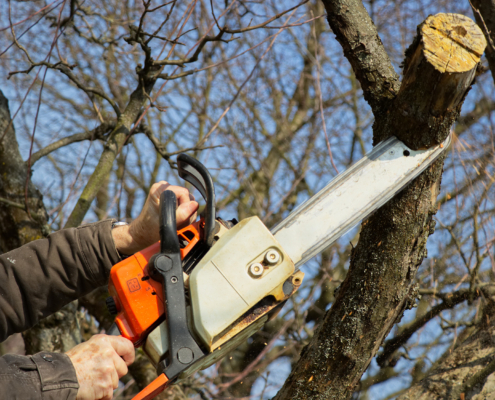
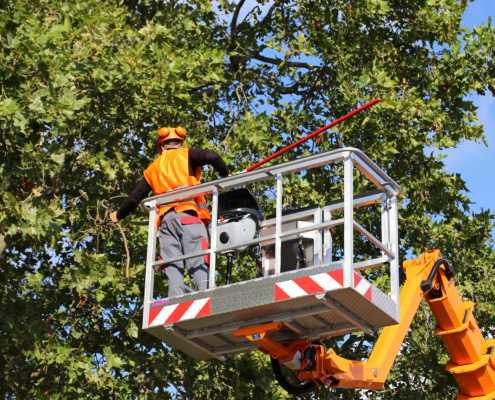
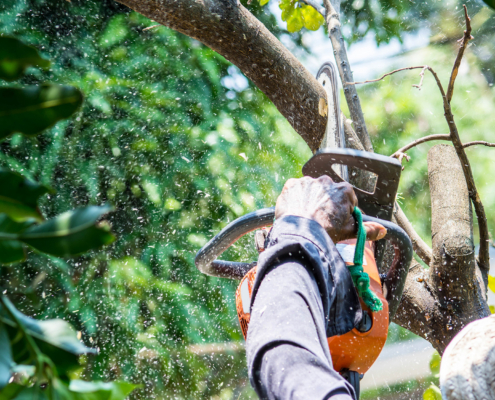
Tree topping means cutting back the main trunk or major scaffold limbs to blunt stubs, removing a large portion of the crown at once. It’s usually requested to reduce height or because a tree feels too large for its space, but the cuts it leaves behind are the problem, and the mechanism behind that problem is worth understanding before any work is scheduled.
When a branch is removed at a lateral with a proper pruning cut, the tree activates a compartmentalization response: it walls off the wound site and redirects energy through the living tissue that remains. That response depends on there being a lateral branch or bud present at the cut to receive that redirected energy. Tree topping leaves stubs with no lateral branch to redirect growth, no collar tissue to drive closure, and wound surfaces far too large for the tree to seal. Decay-causing organisms enter immediately. A topped tree isn’t a pruned tree. It’s a tree with dozens of open entry points for rot, all created in a single afternoon.
Tree topping also strips away most of the crown’s leaf-producing surface all at once. Leaves are how a tree feeds itself through photosynthesis, and when that capacity drops dramatically in a short window, the tree is forced to burn its stored energy reserves on survival rather than growth. That stress compounds every season that follows, making the tree progressively less able to respond to insects, disease, and environmental stress.