Meyer Tree Service
  • Our Services
    • Tree Trimming and Pruning
    • Tree Removal
    • Brush Removal
    • Stump Grinding
    • Tree Planting & Transplanting
    • Emergency Tree Services
    • Lightning Protection
    • Soil Decompaction/Air Excavation
    • Construction Consultation
    • Tree Support & Protection Systems
    • Plant Health Care
  • Commercial Services
  • About Us
    • Leadership Team
    • Certifications
    • Areas We Serve
      • Clayton
      • Kirkwood
      • Ladue
      • Sunset Hills
    • Careers
    • Testimonials
    • Blog
  • Meyer Tree Service-logo-full
  • Certified Arborist
  • Emergency Service
  • Contact
  • Menu Menu

Your Guide to Dormant Season Structural Pruning for Large Oak Trees

Large oak trees are a stunning asset to any property, but when overgrown limbs stretch too far, they become more than a cosmetic issue. Without proper structure, these mature giants are prone to storm damage, limb failure, and long-term decline.

But while you might be tempted to handle a few cuts on your own, pruning large trees is one job better left to professionals, especially during the dormant season when trees respond best to shaping. Learn how structural pruning works, why timing matters, and what every property owner should know before reaching for a saw.

What Is Structural Pruning and Why Do Large Oaks Need It?

Structural pruning focuses on guiding a tree’s growth pattern to promote a strong, balanced canopy. Unlike basic trimming or aesthetic shaping, this method is all about creating a sound framework of tree branches that can support the weight of future growth.

When oaks are left to grow without structural intervention, they often develop heavy, co-dominant stems or limbs that compete for dominance. Over time, this can lead to weak junctions, crowding, and increased risk of breakage.

For property owners with towering oaks near buildings or high-traffic areas, proactive structural pruning is a long-term investment in safety and tree health.

Why Dormant Season Is the Ideal Time to Shape Canopies

Winter is the safest and most effective time for structural pruning. When a tree is dormant, its biological processes slow down, reducing the stress of pruning and allowing cuts to heal with minimal risk of disease transmission. This is particularly beneficial for oak trees, which are vulnerable to diseases like oak wilt if pruned at the wrong time of year.

Other reasons to prune during dormancy include:

  • Better Branch Visibility: With leaves gone, arborists can clearly see the tree’s form and identify problem areas.
  • Lower Disease Risk: Fungal and bacterial pathogens are less active in cold weather, reducing the chances of infection.
  • Optimal Wound Response: Trees compartmentalize pruning wounds more efficiently in early spring after winter cuts.
  • Safe Ground Conditions: Frozen soil offers a more stable platform for equipment, reducing damage to turf or roots.

Structural pruning in winter also ensures the tree is shaped and ready for healthy spring growth—without the risks that come from reactive maintenance during storm season.

Risks of Unbalanced Growth and Overcrowding

When large oak trees grow unchecked, their natural branching habits can lead to long-term structural problems. Co-dominant stems (two trunks growing from the same point), crossing branches, or uneven canopy development increase the likelihood of stress fractures and breakage during storms.

Key risks of neglecting structural pruning include:

  • Heavy limb overextension near homes or driveways, creating liability and safety concerns
  • Dense interior growth that limits airflow and sunlight, encouraging pest and disease issues
  • Imbalanced weight distribution that makes trees more susceptible to wind or ice damage
  • Cracked or weak branch unions where poorly spaced limbs grow too close together

Overcrowded canopies don’t just look unruly, they often signal deeper issues that could shorten the tree’s lifespan or lead to emergencies.

How Arborists Guide Canopy Growth Safely

Structural pruning isn’t about cutting randomly or hacking away at limbs; it’s about intention and expertise. Certified arborists use precise strategies to correct flaws in canopy architecture, ensuring a mature oak tree grows safely and sustainably.

Selective Thinning and Load Distribution

Rather than remove large amounts of foliage at once, arborists thin targeted branches to reduce overall canopy weight. This eases mechanical stress on the tree’s structure while improving light penetration and air circulation.

Branch Spacing and Dominant Leader Development

By identifying and encouraging a dominant central leader, arborists prevent the development of weak, competing trunks. Proper spacing of lateral branches helps create a balanced structure with strong limb attachments, which is especially vital for oaks prone to sprawling growth.

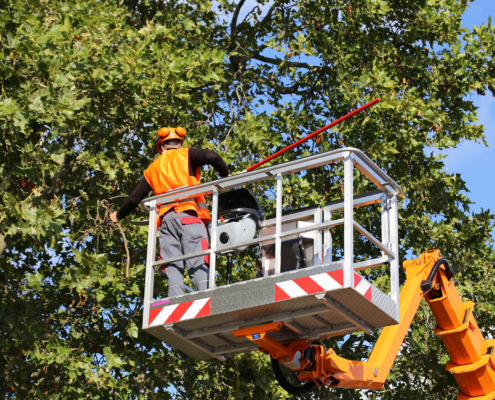
Professional crews also rely on advanced rigging techniques, climbing gear, and industry pruning standards to ensure cuts are made cleanly, safely, and in the right place. For mature oaks, this level of precision is essential.

While you’re pruning, why not clear the clutter too? Pair your winter canopy work with professional brush removal from MTS to give your property a clean, safe foundation heading into spring.

Learn More

The Long-Term Payoff of Structural Pruning

Structural pruning is a long-term strategy that yields significant benefits for both the tree and the property owner. When done correctly, especially during dormancy, structural pruning sets the stage for stronger growth, improved safety, and a more attractive landscape.

Properly pruned oak trees are far more resilient to the wear and tear of age and weather. With improved branch spacing and reduced canopy density, these trees can better withstand high winds, heavy snow, and ice accumulation. Additionally, by minimizing the chances of weak or hazardous limbs developing, you reduce the likelihood of emergency calls or costly damage.

Some of the key long-term benefits include:

  • Reduced risk of breakage during storms, particularly from overextended or poorly attached branches
  • Healthier growth patterns that prevent stress from overcrowded canopies or competing limbs
  • Improved appearance with balanced, symmetrical canopies that enhance curb appeal
  • Fewer corrective pruning needs in the future, thanks to proactive structure management
  • Extended tree lifespan by preventing structural decline and disease vulnerability
  • Increased property value and safety through well-maintained, healthy shade trees

While structural pruning requires expert insight and precision, it’s an investment that pays off year after year.

Don’t Fall for These Winter Pruning Myths

Many property owners hesitate to prune in the winter, often due to outdated information or common misconceptions. However, skipping structural pruning during dormancy can mean missing one of the safest and most beneficial windows for tree care.

Here are some common myths to avoid:

“Winter pruning harms the tree.”

In reality, winter is one of the best times to prune most trees. With foliage gone, arborists have clear visibility into a tree’s structure, making precise cuts easier and more effective. Dormancy also means the tree isn’t actively growing, so wounds close more slowly but with reduced stress and less risk of disease transmission.

“Oaks don’t need pruning unless a limb breaks.”

Waiting for visible damage is risky. Oaks, like all large trees, benefit from preventative structural pruning that reduces hazards before failure occurs. Routine attention helps avoid unbalanced canopies and costly emergency removals.

“I can do it myself, it’s just a few branches.”

This is where DIY efforts can quickly lead to trouble. Large oaks often have high, heavy limbs that require technical skill and safety equipment to prune correctly. Incorrect cuts can destabilize the canopy, introduce decay, or even endanger people and property.

While winter pruning might seem counterintuitive, it’s actually a smart, science-backed strategy for long-term tree health and safety. And when mature oaks are involved, it’s not just about when you prune—but who you trust to do it right.

Trust the Pros at MTS to Prune With Precision

When it comes to structural pruning, experience matters. Meyer Tree Service brings the expertise, equipment, and seasonal insight needed to shape safe, healthy canopies that thrive year after year. Don’t leave your mature trees to chance—schedule a consultation today and let our certified arborists help you get it right this winter.

Share This Post

  • Share on Facebook
  • Share on X
  • Share on WhatsApp
  • Share on Pinterest
  • Share on LinkedIn
  • Share on Tumblr
  • Share on Vk
  • Share on Reddit
  • Share by Mail

More Like This

How Structural Pruning Reduces Storm Damage to Trees in Summer

Tree Trimming & Pruning
https://www.meyertreecare.com/wp-content/uploads/2026/04/How-Storm-Season-Changes-Your-Summer-Pruning-Priorities.jpg 1250 2000 Abstrakt Marketing /wp-content/uploads/2024/06/Meyer-Tree-Service-logo-full.png Abstrakt Marketing2026-04-20 15:56:112026-06-14 08:17:16How Structural Pruning Reduces Storm Damage to Trees in Summer
When and Why to Prune Trees in Spring Before Bud Break

When and Why to Prune Trees in Spring Before Bud Break

Tree Trimming & Pruning
https://www.meyertreecare.com/wp-content/uploads/2026/03/When-and-Why-to-Prune-Trees-in-Spring-Before-Bud-Break.jpg 1250 2000 Abstrakt Marketing /wp-content/uploads/2024/06/Meyer-Tree-Service-logo-full.png Abstrakt Marketing2026-03-13 14:01:532026-06-14 08:17:17When and Why to Prune Trees in Spring Before Bud Break

Why You Should Schedule a Tree Risk Assessment This Winter

Tree Removal, Tree Trimming & Pruning
https://www.meyertreecare.com/wp-content/uploads/2026/01/Why-You-Should-Schedule-a-Tree-Risk-Assessment-This-Winter.jpg 1250 2000 Abstrakt Marketing /wp-content/uploads/2024/06/Meyer-Tree-Service-logo-full.png Abstrakt Marketing2026-01-21 14:49:132026-06-14 08:17:17Why You Should Schedule a Tree Risk Assessment This Winter

The Best Time to Prune Trees in St. Louis: A Local Species Guide

Tree Trimming & Pruning
https://www.meyertreecare.com/wp-content/uploads/2026/01/When-to-Prune-Popular-St.-Louis-Tree-Species.jpg 1250 2000 Abstrakt Marketing /wp-content/uploads/2024/06/Meyer-Tree-Service-logo-full.png Abstrakt Marketing2026-01-21 14:39:072026-06-14 08:17:17The Best Time to Prune Trees in St. Louis: A Local Species Guide
pruning fruit trees with pruning shears

Why Dormant Pruning Is the Best Move for St. Louis Trees This Winter

Tree Trimming & Pruning
https://www.meyertreecare.com/wp-content/uploads/2026/01/pruning-fruit-trees-with-pruning-shears.jpg 1250 2000 Abstrakt Marketing /wp-content/uploads/2024/06/Meyer-Tree-Service-logo-full.png Abstrakt Marketing2026-01-13 07:19:392026-06-14 08:17:17Why Dormant Pruning Is the Best Move for St. Louis Trees This Winter
worker looking at tree limb

The Importance of Tree Limb Inspections for Safer, Healthier Oaks This Winter

Tree Trimming & Pruning
https://www.meyertreecare.com/wp-content/uploads/2025/10/worker-looking-at-tree-limb.jpg 1250 2000 Abstrakt Marketing /wp-content/uploads/2024/06/Meyer-Tree-Service-logo-full.png Abstrakt Marketing2025-10-13 15:56:092026-06-14 08:17:17The Importance of Tree Limb Inspections for Safer, Healthier Oaks This Winter
The Smart Approach to Pruning Trees in Winter

The Smart Approach to Pruning Trees in Winter

Tree Trimming & Pruning
https://www.meyertreecare.com/wp-content/uploads/2025/09/The-Smart-Approach-to-Pruning-Trees-in-Winter.jpg 1250 2000 Abstrakt Marketing /wp-content/uploads/2024/06/Meyer-Tree-Service-logo-full.png Abstrakt Marketing2025-09-19 09:08:072026-06-14 08:17:17The Smart Approach to Pruning Trees in Winter

Dormant Season Pruning for Commercial Properties

Commercial Tree Care, Tree Trimming & Pruning
https://www.meyertreecare.com/wp-content/uploads/2025/06/Dormant-Season-Pruning-for-Commercial-Properties.jpg 1250 2000 Abstrakt Marketing /wp-content/uploads/2024/06/Meyer-Tree-Service-logo-full.png Abstrakt Marketing2025-06-18 09:05:132026-06-14 08:17:18Dormant Season Pruning for Commercial Properties
Oak tree trimming

Why Oak Tree Trimming Is Crucial Before Spring Arrives in St. Louis

Tree Services, Tree Trimming & Pruning
https://www.meyertreecare.com/wp-content/uploads/2025/02/Oak-tree-trimming.jpg 1250 2000 Abstrakt Marketing /wp-content/uploads/2024/06/Meyer-Tree-Service-logo-full.png Abstrakt Marketing2025-02-13 12:42:162026-06-14 08:17:18Why Oak Tree Trimming Is Crucial Before Spring Arrives in St. Louis
Previous Previous Previous Next Next Next

Categories

  • Certified Arborist
  • Commercial Tree Care
  • Deep Root Fertilization
  • Emergency Tree Services
  • Miscellaneous
  • Plant Health Care Services
  • Seasonal Tree Care
  • tree planting and transplanting
  • Tree Removal
  • Tree Services
  • Tree Services (HOAs)
  • Tree Trimming & Pruning

Contact Us

"*" indicates required fields

Address*

Accreditation

asm-isa

Affiliations

Tree Services

Tree Trimming and Pruning

Tree Removal

Tree Planting and Transplanting

Stump Grinding and Removal

Commercial Tree Services

Contact Us

1560 Fairview Ave.
St. Louis, MO 63132

314.426.2911

info@meyertreecare.com


Website by Abstrakt Marketing Group ©
  • Sitemap
  • Privacy Policy
Link to: The Importance of Tree Limb Inspections for Safer, Healthier Oaks This Winter Link to: The Importance of Tree Limb Inspections for Safer, Healthier Oaks This Winter The Importance of Tree Limb Inspections for Safer, Healthier Oaks This Win...worker looking at tree limb Link to: How to Spot Winter Tree Damage in St. Louis (And What to Do About It) Link to: How to Spot Winter Tree Damage in St. Louis (And What to Do About It) How to Spot Winter Tree Damage in St. Louis (And What to Do About It)
Scroll to top Scroll to top Scroll to top

This site uses cookies. By continuing to browse the site, you are agreeing to our use of cookies.

AcceptLearn more

Cookie and Privacy Settings


How we use cookies

We may request cookies to be set on your device. We use cookies to let us know when you visit our websites, how you interact with us, to enrich your user experience, and to customize your relationship with our website.

Click on the different category headings to find out more. You can also change some of your preferences. Note that blocking some types of cookies may impact your experience on our websites and the services we are able to offer.

Essential Website Cookies

These cookies are strictly necessary to provide you with services available through our website and to use some of its features.

Because these cookies are strictly necessary to deliver the website, refusing them will have impact how our site functions. You always can block or delete cookies by changing your browser settings and force blocking all cookies on this website. But this will always prompt you to accept/refuse cookies when revisiting our site.

We fully respect if you want to refuse cookies but to avoid asking you again and again kindly allow us to store a cookie for that. You are free to opt out any time or opt in for other cookies to get a better experience. If you refuse cookies we will remove all set cookies in our domain.

We provide you with a list of stored cookies on your computer in our domain so you can check what we stored. Due to security reasons we are not able to show or modify cookies from other domains. You can check these in your browser security settings.

Other external services

We also use different external services like Google Webfonts, Google Maps, and external Video providers. Since these providers may collect personal data like your IP address we allow you to block them here. Please be aware that this might heavily reduce the functionality and appearance of our site. Changes will take effect once you reload the page.

Google Webfont Settings:

Google Map Settings:

Google reCaptcha Settings:

Vimeo and Youtube video embeds:

Accept settingsHide notification only