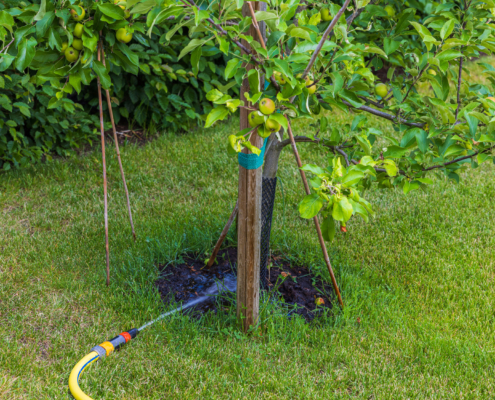
In the spring, trees emerge from dormancy and quickly shift into growth mode. Fertilizing at this time supports that process, often leading to fast canopy development and vigorous new shoots.
This can be beneficial in some cases, especially if your goal is to:
- Stimulate leaf and tip growth in young or newly transplanted trees.
- Improve early-season aesthetic appearance for landscaping.
- Help certain species recover from winter injury with a quick nutrient boost.
But for mature trees or those already under environmental stress, this approach can create more problems than it solves. Nutrients delivered in the spring can overwhelm the tree, pushing it to prioritize above-ground growth when it hasn’t yet reestablished a solid root base.
Potential drawbacks of spring fertilization include:
- Imbalanced energy use, favoring foliage over root development.
- Higher susceptibility to pests and disease, especially if canopy growth outpaces structural strength.
- Timing challenges, such as late frosts or wet conditions that limit nutrient uptake.
- Shorter nutrient retention, as warm soil accelerates microbial activity that breaks down fertilizers quickly.
In short, spring fertilization can be useful, but it’s not always the wisest strategy for long-term health—especially if your trees are mature, stressed, or located in high-risk areas.