Meyer Tree Service
  • Our Services
    • Tree Trimming and Pruning
    • Tree Removal
    • Brush Removal
    • Stump Grinding
    • Tree Planting & Transplanting
    • Emergency Tree Services
    • Lightning Protection
    • Soil Decompaction/Air Excavation
    • Construction Consultation
    • Tree Support & Protection Systems
    • Plant Health Care
  • Commercial Services
  • About Us
    • Leadership Team
    • Certifications
    • Areas We Serve
      • Clayton
      • Kirkwood
      • Ladue
      • Sunset Hills
    • Careers
    • Testimonials
    • Blog
  • Meyer Tree Service-logo-full
  • Certified Arborist
  • Emergency Service
  • Contact
  • Menu Menu

The Ultimate Tree Planting Guide: Best Practices for a Thriving St. Louis Landscape

Choosing and planting the right tree isn’t just about aesthetics. Your decisions play a significant role in creating a sustainable, long-lasting landscape. Proper tree planting and transplanting prevent common issues like root damage, poor soil drainage, and stunted growth. When done correctly, trees enhance your property’s beauty, increase property value, and provide environmental benefits like shade, air purification, and erosion control.
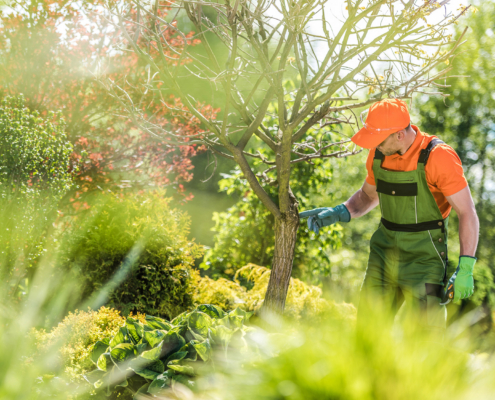
Many property owners in the St. Louis area make the mistake of planting a tree without considering key factors like soil quality, root health, or watering needs. That’s why following expert-recommended techniques—or better yet, hiring professionals—is critical to ensuring your tree thrives for generations. Learn everything you need to know to ensure a successful outcome in this informative tree planting guide.

How to Plant a Tree the Right Way

Planting a tree requires more than just digging a hole. It’s about creating the perfect environment to help the newly planted tree establish strong roots and grow healthy over time. Following the tips in this tree planting guide will set your new trees up for success.

Choosing the Right Location

Where you plant your tree determines how well it grows and thrives over time. A poorly placed tree can struggle with stunted growth and root damage or require removal just a few years later.

Consider the following:

  • Sunlight exposure: Most trees need varying amounts of direct sunlight daily. Planting a shade-loving tree in full sun or vice versa can lead to poor growth, stress, and premature decline.
  • Proximity to buildings and utilities: Tree roots spread far beyond the trunk. Placing trees too close to your home, driveway, or underground pipes can cause cracks, foundation shifts, or plumbing issues.
  • Soil quality: Some trees thrive in nutrient-rich, loamy soil, while others tolerate drier conditions. Understanding what your soil provides ensures proper growth and longevity.

If a tree is planted too close to a building, its roots can potentially damage the foundation, or its branches may scrape against the roof during storms, leading to costly repairs. On the other hand, working with the certified arborists at Meyer Tree Service (MTS) ensures the tree is positioned where it can grow safely and minimize future headaches, enhancing your property’s beauty and functionality.

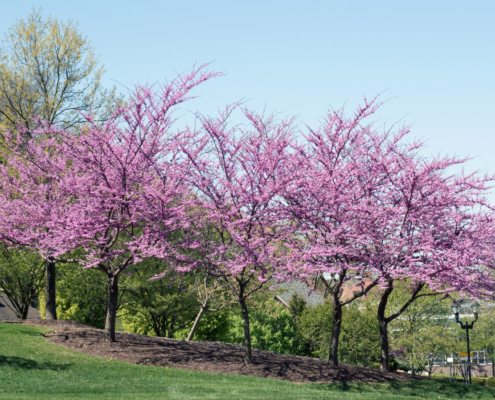
 Check out our expert tips for selecting the perfect type and placement of a tree for your property in this informative article.

Location, Location, Location

Preparing the Soil for Planting

Healthy soil is the foundation of a thriving tree. Trees can struggle to establish roots without proper soil preparation, leading to poor growth or even death. Before planting, take the time to assess and improve your soil:

  • Loosen compacted soil to improve drainage and aeration. Dense, packed soil can suffocate roots, preventing them from spreading and absorbing nutrients.
  • Incorporate organic matter, such as compost or organic material, to enrich the soil and encourage strong root development.
  • Check for drainage issues. Dig a small hole and fill it with water. If the water takes hours to drain, consider soil amendments or raising the planting site to prevent root rot.

Ignoring soil preparation can result in slow growth and disease susceptibility. With MTS’s expertise, soil quality is appropriately assessed and adjusted, giving your tree the healthiest start possible.

Digging the Right-Sized Hole

Many property owners make the mistake of digging a hole that’s either too deep or too narrow, which can suffocate roots or lead to instability. An appropriately sized hole sets the stage for strong root expansion:

  • Make it two to three times wider than the root ball to allow the roots room to spread outward.
  • Ensure the depth is 4-5” shallower than the root ball height. Planting too deep can lead to root suffocation while planting too shallow can cause the tree to topple over in strong winds.
  • Slope the sides of the hole to be wider at the top of the hole to encourage root growth in the right direction.

A tree planted too deep may not receive enough oxygen, leading to slow decline, while a shallowly planted tree may struggle to stay upright in storms. MTS ensures precise planting techniques to eliminate these risks, giving your tree the stability and longevity it needs.

Inspecting and Positioning the Tree

Before it’s time to plant the tree in its new home, taking time to inspect the root system can prevent future complications:

  • Remove circling roots to prevent girdling, which occurs when roots wrap around the trunk and eventually choke the tree.
  • Gently loosen compacted roots to promote outward growth, which helps establish a strong and stable tree.
  • Position the tree so the root flare (where the trunk widens at the tree’s base) is level or slightly above the ground.
  • Remove all transport material from the top ⅔ of the root ball, such as twine, burlap, metal cages, etc.

Planting too deep can cause the tree to rot, while planting too high may expose roots.

Planting a tree without checking for root problems can result in weak growth or premature death. With MTS’s professional tree planting services, trees are correctly positioned and inspected for root health, ensuring a strong start and long-term success.

Backfilling the Planting Hole Correctly

Once the tree is positioned, properly backfilling the hole supports healthy root development and stability:

  • To create a blended transition, use a mix of amended soil and native soil. Adding excessive compost or fertilizer can shock the roots and lead to weak growth.
  • Lightly tamp down the soil in layers to eliminate air pockets that could cause roots to dry out. However, avoid overpacking, making it difficult for roots to spread.
  • Water as you go to help settle the soil and ensure the roots make good contact with the surrounding earth.

Backfilling improperly can leave the tree unstable or struggling to access nutrients. MTS’s planting process guarantees proper soil structure and moisture balance, giving your tree the best conditions to establish itself.

Use Proper Watering Techniques

Watering is one of the most crucial steps in helping a newly planted tree adapt to its environment. Without proper watering, trees can suffer from transplant shock, slowing their growth or causing them to decline.

  • Water deeply once or twice a week instead of frequent, shallow watering. This encourages roots to grow downward for stability.
  • Adjust based on rainfall. If the weather is rainy, cut back on watering to prevent root rot. If it’s dry, increase the watering frequency.  Just because it’s hot doesn’t mean it’s dry, so feel the soil.
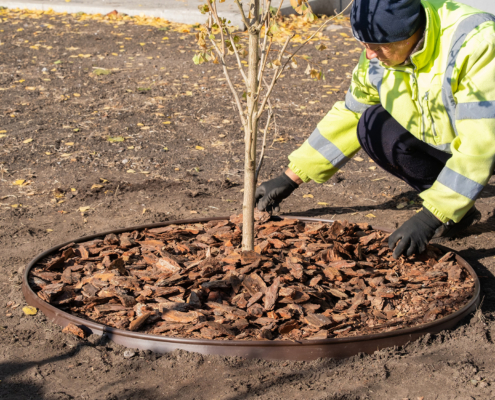
  • Mulch around the base of the tree to retain moisture and regulate the surrounding soil temperature. Keep mulch 2-3 inches away from the trunk to prevent rot.

Overwatering can drown the roots, while underwatering can lead to dry, brittle branches and weak development. MTS provides expert watering guidance tailored to your specific tree species and location, ensuring it receives the right amount of hydration.

Provide Post-Planting Care

The first one to two years after planting is critical for your tree’s ongoing success. During this period, it’s essential to monitor the tree’s progress and provide additional care:

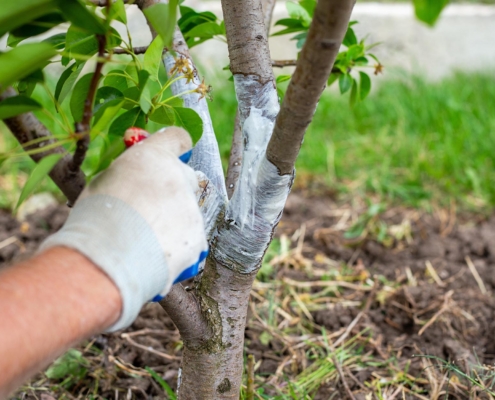
  • Check for pests and diseases regularly. Young trees are more vulnerable to infections and insect damage.
  • Only stake the tree if necessary, and remove supports once the tree is stable. Leaving stakes too long can weaken the trunk.
  • Prune lightly to remove damaged or dead branches, but avoid heavy trimming during the first year, as the tree needs energy to establish its root system.

Ignoring early care can result in stunted growth, weak branches, or even tree loss. MTS offers professional monitoring and maintenance to ensure your newly planted tree remains healthy and resilient throughout its establishment phase.

 Achieving a lasting, healthy, and beautiful landscape requires more than a tree-planting guide—it takes expertise. Explore MTS’s planting services to see how we can ensure your trees thrive.  

Tree Planting Services

Common Mistakes to Avoid When Planting Trees

Even well-intentioned tree planting efforts can go wrong. Here are a few common mistakes property owners make:

  • Planting too deep or too shallow: this can cause root rot or instability.
  • Ignoring root defects: failing to inspect roots can lead to girdling.
  • Overwatering or underwatering: improper watering can stunt growth or promote disease.
  • Choosing the wrong tree for the location: planting a tree that will outgrow its space leads to removal down the road.

Avoiding these mistakes ensures a healthier, more resilient tree.

The Best Time to Plant Trees in St. Louis

Timing is everything when it comes to tree planting. Choosing the right season reduces stress on the tree and increases its chances of long-term survival. In St. Louis, fall and early spring are the best times to plant most trees, as moderate temperatures and consistent moisture help young trees establish their roots before facing extreme summer heat or winter cold.

Below, we’ll break down the best planting times for some of the most commonly planted trees in the area and highlight species that should be avoided.

Best Trees to Plant in St. Louis and When to Plant Them

No tree planting guide would be complete without discussing the ideal species to plant and when you should. Let’s look at some of the most common and beneficial trees you should consider.

  • Oak Trees (Red Oak, White Oak): Oaks are best planted in the fall, winter, or early spring growing season. They develop deep root systems that need time to establish before summer heat. Avoid planting in mid-to-late spring and summer, as rising temperatures can stress young trees.
  • Maple Trees (Sugar Maple, Red Maple): These vibrant trees thrive when planted in early spring or fall, allowing roots to grow in cool soil. Spring planting should be early enough to ensure proper root development before summer heat sets in.
  • Dogwood Trees: Best planted in the fall, dogwoods establish strong roots in cool soil, ensuring healthier spring blooms. Avoid summer planting, as their shallow roots are prone to drought stress.
  • Native Missouri Hardwoods (Hickory, Black Walnut, Sweetgum, Kentucky Coffee Tree): These hardy trees are well-suited to the St. Louis climate and should be planted in late fall to early winter, allowing them to go dormant before resuming active growth in spring.
  • Evergreens (Eastern Red Cedar, White Pine, Spruce Varieties): Planting evergreens in early spring or late summer gives them the best chance to establish roots before extreme cold temperatures hit. Avoid mid-summer planting, as high heat can stress all new trees.

Trees to Avoid Planting in St. Louis

While some trees thrive in the St. Louis area, others can cause long-term issues for homeowners and commercial properties.

  • Bradford Pear: Once a favorite for its fast growth and ornamental white blooms, this tree has become a major problem in Missouri. Its weak branch structure makes it highly susceptible to storm damage, and its invasive nature allows it to spread aggressively, overtaking native plants.
  • Mimosa Tree: With striking pink, feathery flowers, mimosa trees may seem appealing, but they have short lifespans and are highly susceptible to disease and pests. Their weak wood breaks easily, and their rapid seed production allows them to spread uncontrollably, creating maintenance headaches.
  • Ash Trees: The Emerald Ash Borer infestation has made planting ash trees in St. Louis a poor choice. These invasive pests have devastated the ash population, making long-term survival unlikely. If you already have ash trees, regular inspections and preventative treatments are essential to prolong their lifespan.

Let the Experts at MTS Handle All Your Tree Planting Needs

Looking for expert tree planting services in St. Louis? Meyer Tree Service provides professional consultation, site selection, and expert planting to ensure your trees flourish. Contact us today to schedule an in-person consultation and take the first step toward a beautiful, thriving landscape.

Share This Post

  • Share on Facebook
  • Share on X
  • Share on WhatsApp
  • Share on Pinterest
  • Share on LinkedIn
  • Share on Tumblr
  • Share on Vk
  • Share on Reddit
  • Share by Mail

More Like This

What to Look for When Hiring a Tree Company in St. Louis

What to Look for When Hiring a Tree Company in St. Louis

Tree Services
https://www.meyertreecare.com/wp-content/uploads/2026/06/What-to-Look-for-When-Hiring-a-Tree-Company-in-St.-Louis.jpg 1250 2000 Abstrakt Marketing /wp-content/uploads/2024/06/Meyer-Tree-Service-logo-full.png Abstrakt Marketing2026-06-17 08:41:552026-06-18 08:17:19What to Look for When Hiring a Tree Company in St. Louis

How to Provide Tree Protection for Young Trees Facing Severe Weather

Tree Services
https://www.meyertreecare.com/wp-content/uploads/2026/04/How-to-Provide-Tree-Protection-for-Young-Trees-Facing-Severe-Weather.jpg 1250 2000 Abstrakt Marketing /wp-content/uploads/2024/06/Meyer-Tree-Service-logo-full.png Abstrakt Marketing2026-04-17 15:48:212026-06-18 08:17:19How to Provide Tree Protection for Young Trees Facing Severe Weather
St. Louis Homeowners’ Guide to Spring Storm Preparation for Trees

St. Louis Homeowners’ Guide to Spring Storm Preparation for Trees

Tree Services
https://www.meyertreecare.com/wp-content/uploads/2026/04/St.-Louis-Homeowners-Guide-to-Spring-Storm-Preparation-for-Trees.jpg 1250 2000 Abstrakt Marketing /wp-content/uploads/2024/06/Meyer-Tree-Service-logo-full.png Abstrakt Marketing2026-04-07 10:20:432026-06-18 08:17:20St. Louis Homeowners’ Guide to Spring Storm Preparation for Trees
Common Tree Problems St. Louis Homeowners Should Watch for After Winter

Common Tree Problems St. Louis Homeowners Should Watch for After Winter

Tree Services
https://www.meyertreecare.com/wp-content/uploads/2026/04/Common-Tree-Problems-St.-Louis-Homeowners-Should-Watch-for-After-Winter.jpg 1250 2000 Abstrakt Marketing /wp-content/uploads/2024/06/Meyer-Tree-Service-logo-full.png Abstrakt Marketing2026-04-02 23:05:422026-06-18 08:17:20Common Tree Problems St. Louis Homeowners Should Watch for After Winter

How to Spot Winter Tree Damage in St. Louis (And What to Do About It)

Tree Services
https://www.meyertreecare.com/wp-content/uploads/2026/01/How-to-Spot-Winter-Tree-Damage-in-St.-Louis-And-What-to-Do-About-It.jpg 1250 2000 Abstrakt Marketing /wp-content/uploads/2024/06/Meyer-Tree-Service-logo-full.png Abstrakt Marketing2026-01-06 08:02:172026-06-18 08:17:21How to Spot Winter Tree Damage in St. Louis (And What to Do About It)

Landscaping Tips for Summer: How to Keep Your Property Green and Gorgeous

Tree Services
https://www.meyertreecare.com/wp-content/uploads/2025/04/How-to-Keep-Your-Property-Green-and-Gorgeous.jpg 1250 2000 Abstrakt Marketing /wp-content/uploads/2024/06/Meyer-Tree-Service-logo-full.png Abstrakt Marketing2025-04-25 15:24:392026-06-18 08:17:23Landscaping Tips for Summer: How to Keep Your Property Green and Gorgeous

Your Complete Guide to Tree Anatomy: Roots, Trunks, and Canopies

Tree Services
https://www.meyertreecare.com/wp-content/uploads/2025/04/Your-Complete-Guide-to-Tree-Anatomy.jpg 1250 2000 Abstrakt Marketing /wp-content/uploads/2024/06/Meyer-Tree-Service-logo-full.png Abstrakt Marketing2025-04-25 13:16:082026-09-17 11:05:32Your Complete Guide to Tree Anatomy: Roots, Trunks, and Canopies
Native Flowering Trees for Your Landscaping in Missouri

Native Flowering Trees for Your Landscaping in Missouri

Tree Services
https://www.meyertreecare.com/wp-content/uploads/2025/04/Native-Flowering-Trees-for-Your-Landscaping-in-Missouri.jpg 1250 2000 Abstrakt Marketing /wp-content/uploads/2024/06/Meyer-Tree-Service-logo-full.png Abstrakt Marketing2025-04-04 07:49:022026-06-18 08:17:23Native Flowering Trees for Your Landscaping in Missouri
Person wrapping tree to protect it from insects

Treating Tree Pests: Protect Your St. Louis Landscape with Professional Care

Tree Services
https://www.meyertreecare.com/wp-content/uploads/2025/02/Person-wrapping-tree-to-protect-it-from-insects.jpg 1250 2000 Abstrakt Marketing /wp-content/uploads/2024/06/Meyer-Tree-Service-logo-full.png Abstrakt Marketing2025-02-13 17:39:562026-06-18 08:17:24Treating Tree Pests: Protect Your St. Louis Landscape with Professional Care
Previous Previous Previous Next Next Next

Categories

  • Certified Arborist
  • Commercial Tree Care
  • Deep Root Fertilization
  • Emergency Tree Services
  • Miscellaneous
  • Plant Health Care
  • Plant Health Care Services
  • Root Care
  • Seasonal Tree Care
  • Soil Services
  • tree planting and transplanting
  • Tree Removal
  • Tree Services
  • Tree Services (HOAs)
  • Tree Trimming & Pruning

Contact Us

"*" indicates required fields

Address*

Accreditation

asm-isa

Affiliations

Tree Services

Tree Trimming and Pruning

Tree Removal

Tree Planting and Transplanting

Stump Grinding and Removal

Commercial Tree Services

Contact Us

1560 Fairview Ave.
St. Louis, MO 63132

314.426.2911

info@meyertreecare.com


Website by Abstrakt Marketing Group ©
  • Sitemap
  • Privacy Policy
Link to: Treating Tree Pests: Protect Your St. Louis Landscape with Professional Care Link to: Treating Tree Pests: Protect Your St. Louis Landscape with Professional Care Treating Tree Pests: Protect Your St. Louis Landscape with Professional Car...Person wrapping tree to protect it from insects Link to: How To Care for Newly Planted Trees in the St. Louis Area Link to: How To Care for Newly Planted Trees in the St. Louis Area Person planting new treeHow To Care for Newly Planted Trees in the St. Louis Area
Scroll to top Scroll to top Scroll to top

This site uses cookies. By continuing to browse the site, you are agreeing to our use of cookies.

AcceptLearn more

Cookie and Privacy Settings


How we use cookies

We may request cookies to be set on your device. We use cookies to let us know when you visit our websites, how you interact with us, to enrich your user experience, and to customize your relationship with our website.

Click on the different category headings to find out more. You can also change some of your preferences. Note that blocking some types of cookies may impact your experience on our websites and the services we are able to offer.

Essential Website Cookies

These cookies are strictly necessary to provide you with services available through our website and to use some of its features.

Because these cookies are strictly necessary to deliver the website, refusing them will have impact how our site functions. You always can block or delete cookies by changing your browser settings and force blocking all cookies on this website. But this will always prompt you to accept/refuse cookies when revisiting our site.

We fully respect if you want to refuse cookies but to avoid asking you again and again kindly allow us to store a cookie for that. You are free to opt out any time or opt in for other cookies to get a better experience. If you refuse cookies we will remove all set cookies in our domain.

We provide you with a list of stored cookies on your computer in our domain so you can check what we stored. Due to security reasons we are not able to show or modify cookies from other domains. You can check these in your browser security settings.

Other external services

We also use different external services like Google Webfonts, Google Maps, and external Video providers. Since these providers may collect personal data like your IP address we allow you to block them here. Please be aware that this might heavily reduce the functionality and appearance of our site. Changes will take effect once you reload the page.

Google Webfont Settings:

Google Map Settings:

Google reCaptcha Settings:

Vimeo and Youtube video embeds:

Accept settingsHide notification only